
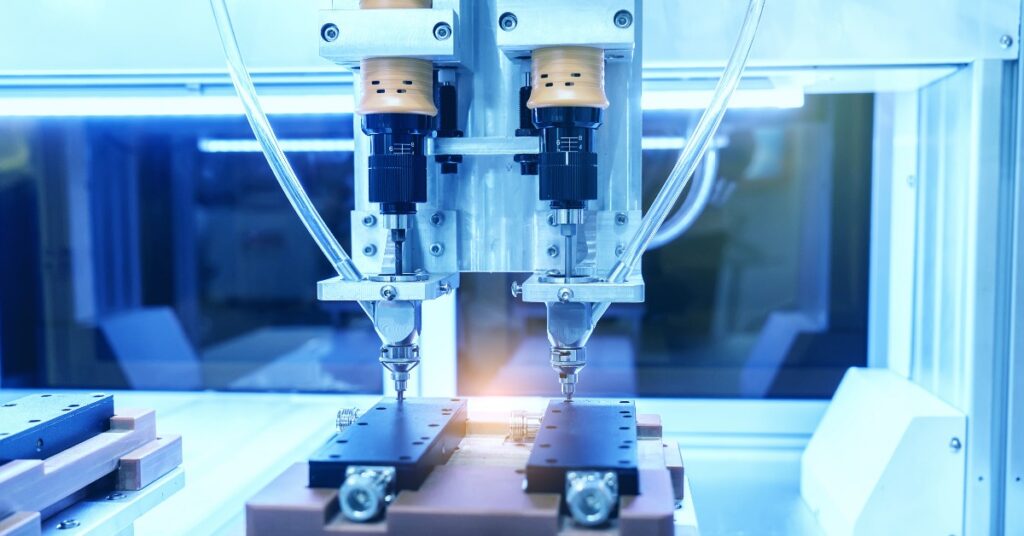
Manufacturers face constant pressure to increase output without sacrificing accuracy or product quality in large-scale warehouse and assembly facilities. Assembly teams need dependable equipment that keeps pace with modern production demands across automotive, electronics, medical, and industrial markets.
For warehouse managers seeking better technology, it is important to understand automated fasteners feeding technology and how it is a vital component of efficiency. Automated fasteners help manufacturers maintain consistent assembly speeds while reducing manual handling during production.
Understanding Automated Fastener Feeding Technology
Automated fastener feeding technology moves screws, nuts, pins, clips, bolts, and specialty components directly to an assembly point. The system organizes and delivers each fastener through controlled mechanical processes that eliminate inefficient manual loading.
Manufacturers use these systems to improve throughput and reduce production interruptions across demanding assembly environments. Engineers often integrate automated feeding equipment with robotics or fully automated assembly lines to support continuous production.
How Automated Feeding Systems Operate
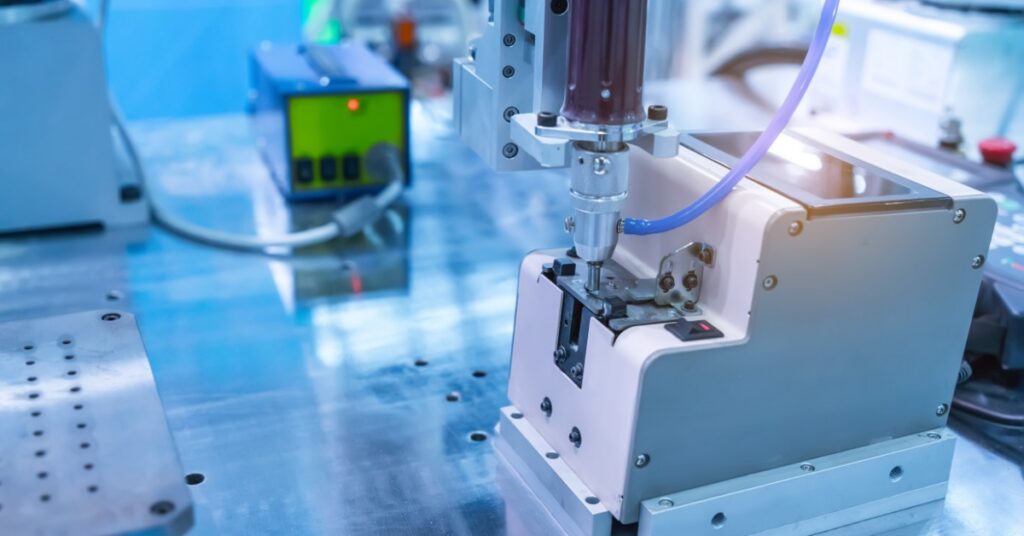
Most automated feeding systems rely on a hopper, a feeder mechanism, a delivery track, and a driver interface to move fasteners through the process. The hopper stores bulk fasteners while the feeder mechanism sorts and positions each component for controlled delivery.
Delivery tracks transport fasteners to the installation point, where a screwdriver, nutrunner, or robotic assembly tool completes the fastening cycle. Operators and engineers can configure each system to match fastener geometry and assembly layout requirements.
Why Manufacturers Choose Automated Feeding Technology
Manufacturers choose automated fastener feeding technology because the equipment increases efficiency across nearly every stage of production. Automated systems reduce repetitive manual tasks that slow production and create inconsistencies during assembly operations.
Consistent fastener presentation also helps operators maintain better installation accuracy while reducing the chance of cross-threading or misalignment. Production managers gain greater process control because automated systems support repeatable fastening performance throughout long manufacturing runs.
Many manufacturing facilities also struggle with labor shortages that affect production schedules and assembly consistency. Automated feeding systems help companies maintain productivity levels without relying heavily on manual fastener handling during repetitive assembly tasks. Engineering teams can scale production more effectively because automated systems support faster cycle times and reduced downtime.
Industries That Depend on Automated Fastener Feeding Systems
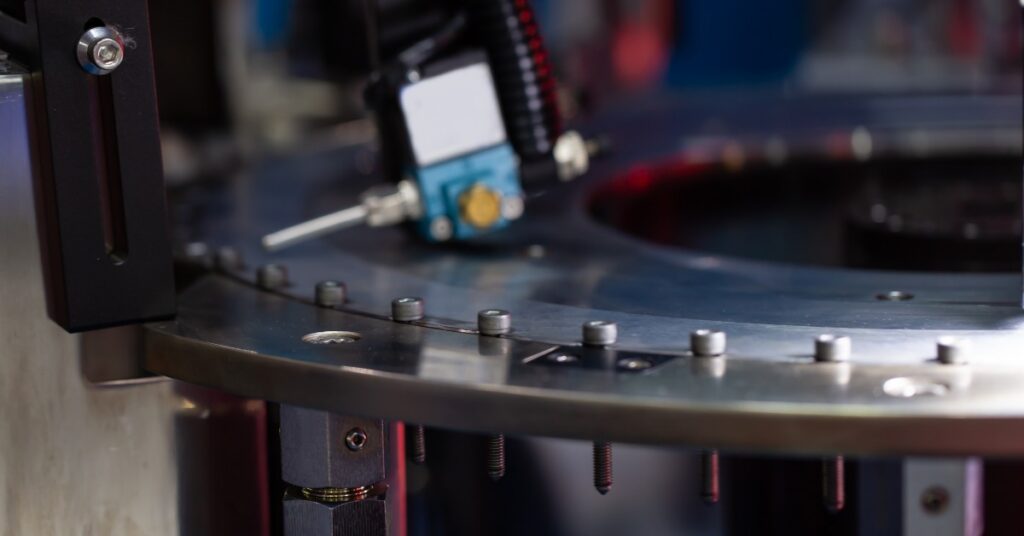
Automotive manufacturers use automated feeding systems to support high-speed assembly processes that require accuracy and repeatability. Medical device companies also rely on precise fastening systems because their products require consistent assembly performance and strict quality standards.
Electronics manufacturers integrate automated screwdriving and feeding systems into production lines that handle compact components and delicate assemblies. Industrial equipment manufacturers use automated technology to support large-scale assembly operations that involve multiple fastener types and configurations.
Manufacturers across these industries often require custom solutions that match unique product designs and production goals. Some applications require robotic integration while others require handheld systems that support flexible assembly stations.
Engineers may also need specialized feeding equipment for miniature fasteners, specialty clips, or complex installation angles. Visumatic develops custom automated fastening solutions that address specific assembly challenges across demanding manufacturing environments.
Key Benefits of Automated Fastener Feeding Technology
Automated feeding systems offer several important advantages for manufacturers seeking greater production consistency and operational efficiency. These systems improve assembly performance while helping teams maintain accurate fastening processes throughout each production cycle.
Many manufacturers also use automated equipment to reduce operator fatigue during repetitive assembly tasks. The technology creates measurable improvements across productivity, quality control, and long-term operational reliability.
Key advantages include:
- Faster assembly cycle times across high-volume production lines
- Improved fastener positioning and installation accuracy
- Reduced operator fatigue during repetitive assembly processes
- Better workstation organization and cleaner production environments
- Lower risk of missing or improperly installed fasteners
- Greater consistency across large production runs
- Easier integration with robotics and automated assembly systems
The Role of Robotics in Automated Feeding Technology
Modern manufacturers increasingly combine robotic automation with advanced fastener feeding systems to maximize production efficiency. Robotic screwdriving systems use automated feeders to supply fasteners directly to robotic arms during assembly operations.
This integration allows manufacturers to maintain continuous production while reducing delays caused by manual loading or repositioning. Engineering teams can also program robotic systems to handle complex assembly sequences that require precise fastener placement and torque control.
Collaborative robots continue to expand opportunities for automated fastening applications across flexible manufacturing environments. Many manufacturers now deploy cobots alongside operators to support assembly tasks that require speed, consistency, and safe interaction. Manufacturers gain greater flexibility because engineers can adapt robotic fastening systems to changing production requirements and product designs.
Factors Engineers Consider Before System Integration
Engineering teams evaluate several important factors before selecting automated fastener feeding technology for a production environment. Fastener size, material type, geometry, and installation orientation all influence equipment configuration and system performance. Engineers also review cycle-time goals and production volumes before selecting a feeding and driving solution.
Manufacturers also consider maintenance requirements and long-term operational support when evaluating automated assembly equipment. In-house engineering and testing capabilities often play an important role because manufacturers need dependable solutions that perform consistently under demanding conditions.
Visumatic designs and quality-checks every system internally to maintain high-performance standards across each project. Exhaustive testing procedures help manufacturers deploy reliable fastening systems with confidence across critical production applications.
Automated Feeding Technology Supports Long-Term Growth
Manufacturers continue to invest in automated fastener feeding technology because modern production demands speed and operational consistency. Automated systems help companies increase output while maintaining better control over assembly quality and production efficiency. Engineering teams also gain greater flexibility because automated feeding solutions support robotic integration and custom assembly configurations.
Visumatic develops automated fastener devices and driving systems that help manufacturers solve complex assembly challenges across a wide range of industries. We design custom solutions for specialty fasteners using extensive engineering expertise and in-house manufacturing capabilities. From custom fastener insertions to automatic nut drivers, Visumatic provides warehouse automation solutions for a variety of industries.
Manufacturers benefit from dependable equipment and fastening solutions that meet the demands of demanding production environments. Automated fastener feeding technology continues to shape the future of manufacturing by delivering faster assembly speeds, greater consistency, and improved operational performance. Contact Visumatic today to get a quote on our automated fastener systems.