
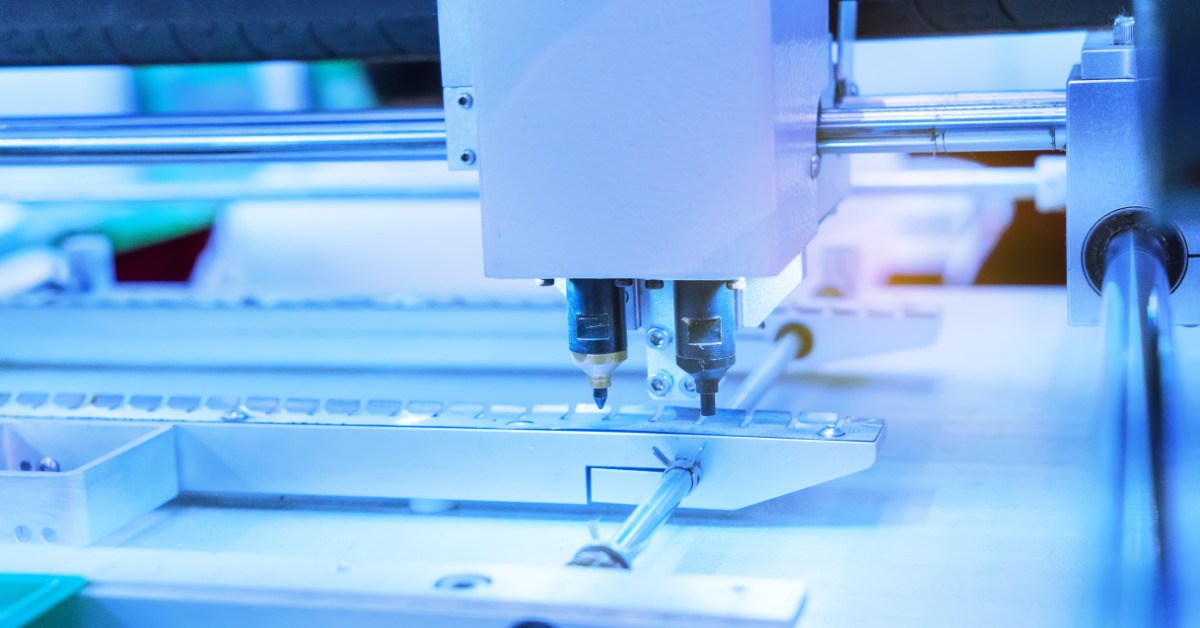
Modern manufacturing leaves little room for inconsistency, especially as production demands continue to rise and quality expectations grow. Companies that rely on automated assembly need equipment that delivers speed, precision, and repeatable performance without slowing production.
Understanding the key advantages of robotic fastening systems helps engineering teams identify opportunities to improve efficiency and build more reliable manufacturing processes. With robotic fastening systems, manufacturing operations can enhance their work and avoid costly mistakes.
Improve Assembly Accuracy From the First Fastener
Accuracy remains one of the greatest strengths of robotic fastening systems. Robots follow programmed motion paths with exceptional repeatability, allowing every fastener to enter the correct location at the proper angle. Consistent positioning reduces alignment issues that often occur during manual assembly while supporting tighter manufacturing tolerances.
Integrated sensors also verify each fastening cycle before the process moves forward. Torque, angle, depth, and seating measurements help identify potential defects immediately, rather than allowing problems to persist through production. Early verification minimizes scrap while improving confidence in finished assemblies.
Increase Production Speed Without Sacrificing Quality
Manufacturers often struggle to balance production speed with product consistency. Robotic fastening systems eliminate many delays associated with manual fastening because automated equipment performs repetitive cycles without fatigue or interruptions. Faster cycle times increase throughput while maintaining the same level of precision throughout every shift.
Automation also reduces unnecessary motion between fastening locations. Robots travel optimized paths that engineers design specifically for each application, eliminating wasted movement while maximizing efficiency. Higher productivity allows manufacturers to meet growing demand without compromising assembly quality.
Deliver Consistent Torque Across Every Product
Fastener torque directly affects product reliability and long-term performance. Manual fastening often introduces variation because operators naturally differ in technique, experience, and endurance throughout the workday. Robotic fastening systems apply programmed torque values consistently regardless of production volume or shift length.
Accurate torque control also supports compliance with demanding manufacturing specifications. Industries such as automotive, aerospace, medical device, and electronics manufacturing depend on repeatable fastening performance to maintain strict quality standards. Consistent fastening reduces costly warranty claims while strengthening customer confidence.
Support Better Quality Control With Real-Time Data
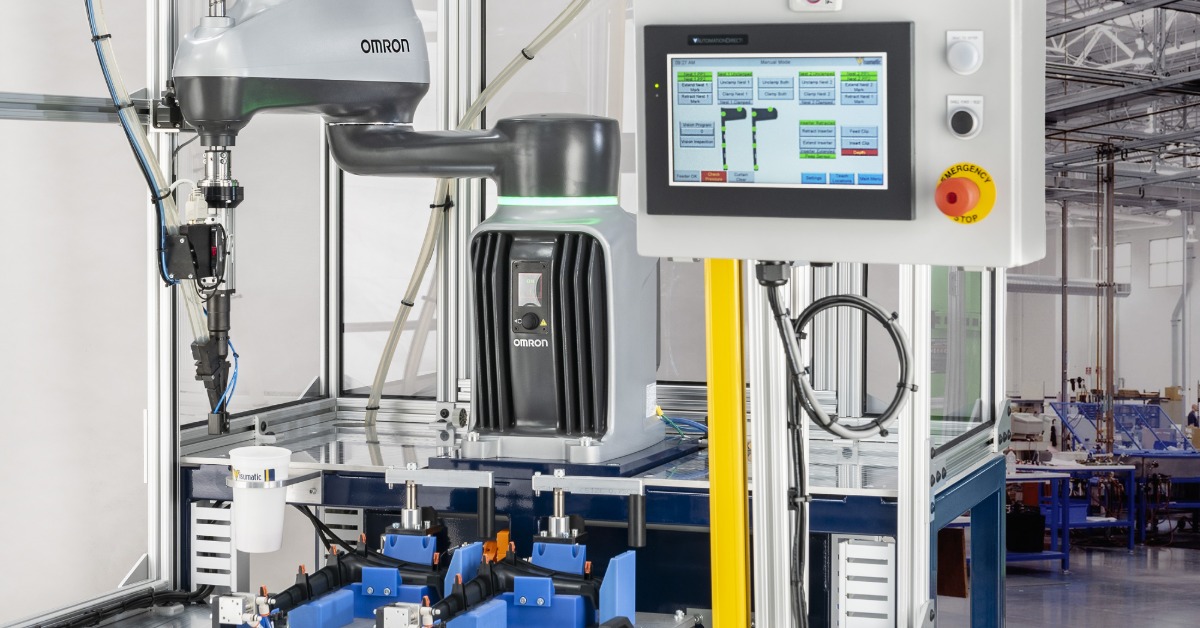
Modern robotic fastening equipment provides valuable production data during every fastening cycle. Integrated controllers capture torque readings, fastening angles, cycle completion status, and other performance metrics that engineers use to verify quality. Detailed records simplify troubleshooting while supporting continuous process improvement.
Real-time monitoring also allows production teams to respond quickly when abnormalities appear. Instead of discovering defects after final inspection, operators receive immediate notifications when fastening parameters fall outside acceptable limits. Faster corrective action minimizes downtime and reduces expensive rework.
Some of the most valuable quality data includes:
- Torque verification for every fastening cycle
- Fastener presence confirmation
- Angle monitoring throughout installation
- Cycle completion tracking
- Production history for traceability
Reduce Workplace Injuries During Repetitive Assembly
Manual fastening requires repetitive wrist movements, awkward body positions, and continuous physical effort throughout each shift. Over time, repetitive motion contributes to fatigue while increasing the likelihood of ergonomic injuries among assembly workers. Robotic fastening systems perform these demanding tasks while allowing employees to focus on higher-value responsibilities.
Improved ergonomics benefits both employees and employers. Reduced physical strain often lowers injury-related costs while improving employee satisfaction and retention. Healthier working conditions also contribute to greater overall productivity across the manufacturing floor.
Adapt Easily to Changing Manufacturing Requirements
Manufacturing environments rarely remain static for long. Product updates, new customer requirements, and shorter production runs require assembly equipment that adjusts quickly and incurs minimal downtime. Robotic fastening systems provide flexibility through programmable motion paths and configurable fastening parameters.
Engineering teams can modify fastening sequences without replacing large portions of equipment. Many systems accommodate multiple fastener sizes and assembly configurations through software updates or tooling changes. This flexibility helps manufacturers remain competitive while responding to evolving customer needs.
Production facilities also benefit from shorter transition periods when introducing new product lines or revising existing assemblies. Engineers can validate updated fastening programs before full-scale production begins, reducing startup delays and minimizing disruption to manufacturing schedules.
Support Complex Assembly Applications
Many modern products contain intricate assemblies with limited access points or demanding fastening requirements. Manual installation becomes increasingly difficult as product complexity increases. Robotic systems maintain accurate positioning even when components require challenging fastening angles or tight installation tolerances.
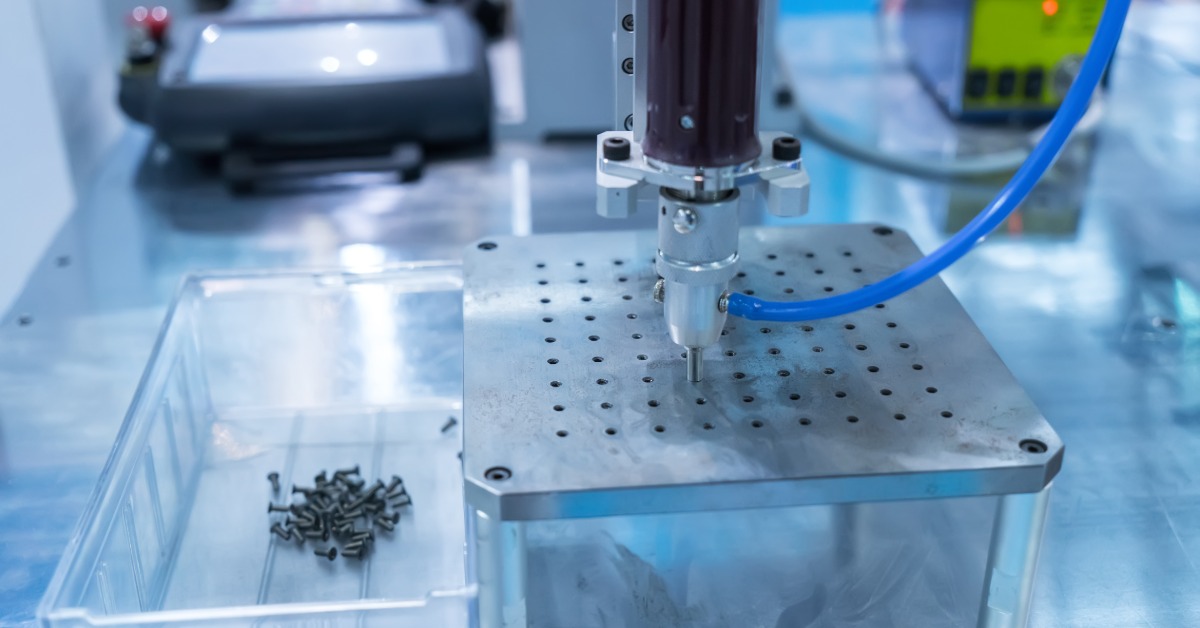
Advanced automation also supports applications involving screws, nuts, bolts, clips, pins, and specialty fasteners. Integrated feeding equipment ensures every fastener arrives correctly oriented before installation begins. Manufacturers handling complex assemblies often rely on robotic screw fastening to achieve reliable, repeatable results across demanding production environments.
Improve Long-Term Manufacturing Costs
Robotic fastening systems require an initial capital investment, yet many manufacturers achieve substantial long-term financial benefits. Increased throughput and fewer quality issues improve operational efficiency across multiple production lines. Better consistency also minimizes expensive warranty claims associated with fastening defects.
Operating costs become more predictable because automated systems maintain stable production performance over extended periods. Manufacturers also reduce dependence on labor-intensive repetitive assembly operations while reallocating skilled employees toward programming and process optimization. Those improvements often produce measurable returns over the equipment’s service life.
Strengthen Manufacturing Scalability for Future Growth
Successful manufacturers continually prepare for increasing production demands. Robotic fastening systems allow facilities to expand output without sacrificing fastening accuracy or quality consistency. Once engineers validate a fastening program, manufacturers can duplicate that process across additional production cells with minimal variation.
Scalable automation also supports expansion into new product lines. Engineering teams build on proven fastening strategies rather than creating entirely new manual assembly processes for each product introduction. Standardized automation accelerates deployment while maintaining dependable production quality across growing manufacturing operations.
Move Manufacturing Performance to the Next Level
Manufacturers continue to pursue greater quality and stronger process control as customer expectations evolve. These advantages of robotic fastening systems demonstrate how automation improves long-term operational performance.
Organizations that invest strategically in automated fastening technology position themselves for greater scalability and manufacturing success. Visumatic Industrial Products designs and builds advanced automated fastening equipment for manufacturers that require dependable, high-performance assembly solutions.
Every system undergoes in-house design, fabrication, quality control, and extensive testing to ensure reliable operation across demanding production environments. Regardless of the applicator, Visumatic develops customized automated solutions that help engineering teams solve complex fastening challenges with confidence. Contact us today to request a quote and start optimizing your assembly line.
 Handheld vs Robotic Screwdriving Systems Explained
  How Automatic Screwdrivers Improve Accuracy
  How Automation Reduces Labor Costs in Manufacturing
  9 Benefits of Automation in Fastener Installation
  How Robotic Screwdriving Improves Assembly Speed